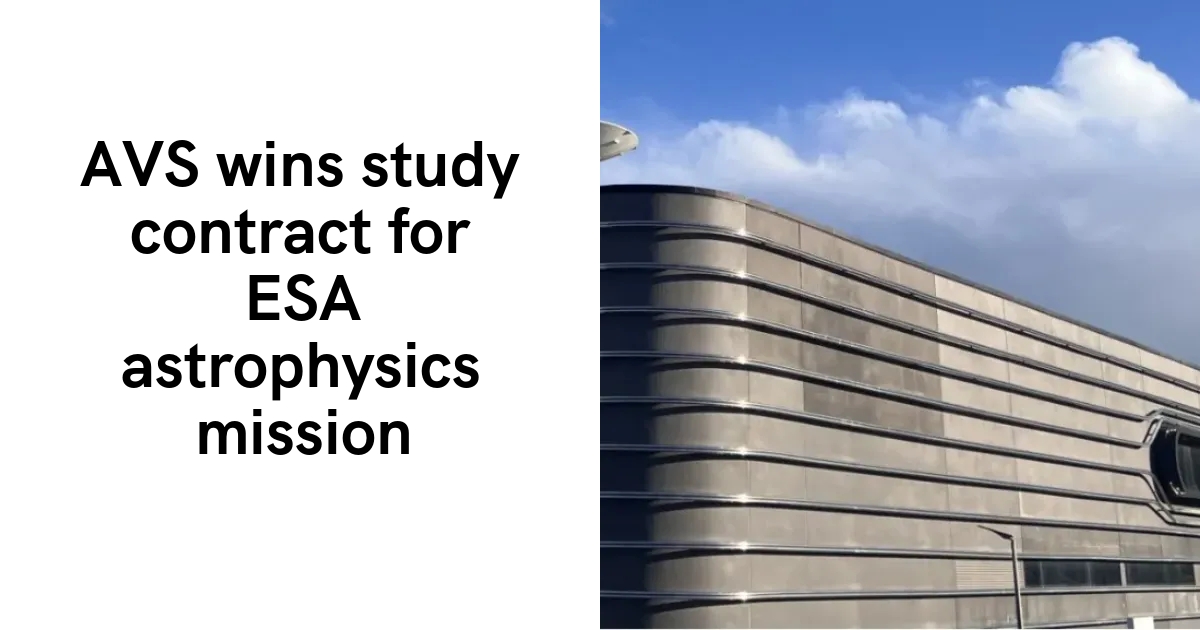
Connect with us

Astrophysics

Hidden DNA-sized crystals in cosmic ice could rewrite water-and life itself

Published

on

Cosmic Ice holds Secret Crystals: New Discovery Reshapes Our Understanding of the Universe

Advertisement

What’s Happening?

Imagine looking into the cosmos and discovering that what we thought were chaotic ice clouds are actually harboring tiny, hidden crystals. Scientists have just unveiled that “space ice,” previously believed to lack structure, is sprinkled with micro-crystals mere nanometers wide. This groundbreaking finding could revolutionize our understanding of the universe and even shed light on the origins of life.

Where Is It Happening?

This discovery is reshaping our view of ice formations across the vast expanse of the cosmos, with implications reaching from deep space to right here on Earth.

Advertisement

When Did It Take Place?

The study was recently published following simulations and lab experiments conducted by researchers at UCL and the University of Cambridge.

How Is It Unfolding?

– Scientists identified micro-crystals hidden within space ice, defying previous assumptions that this ice was disordered.
– These tiny crystals, measuring only nanometers wide, were discovered through advanced simulations and experiments.
– Findings suggest that even the most common forms of ice in space retain a surprising level of structure.
– This revelation has wide-ranging implications for astrophysics, the search for extraterrestrial life, and advanced material technologies.

Advertisement

Quick Breakdown

– Space ice is now known to contain nanometer-sized crystals.
– Previously, it was thought to lack any structured form.
– Advanced simulations and experiments by UK scientists led to this discovery.
– Implications extend to our understanding of the universe, life origins, and materials science.

Key Takeaways

The discovery of micro-crystals within space ice rewrites our fundamental understanding of this cosmic material. It means that even in the frigid depths of space, molecular structures hold more order than we ever imagined. This could change everything, from how we study the formation of stars and planets to how we explore the very beginnings of life. The universe just got a little bit more fascinating, as these tiny crystals hint at hidden complexities that could unlock some of the biggest mysteries of the cosmos. It’s like finding a perfectly arranged atom within a snowflake of chaos.

Advertisement
Just as a gemstone reveals hidden facets when exposed to light, these crystals uncover a whole new dimension of complexity in our universe.

The structure of space ice could be the missing puzzle piece connecting cosmic chemistry to the origins of life as we know it.
– Dr. Eva Stellar, Cosmic Materials Scientist

Final Thought

This groundbreaking discovery challenges long-held beliefs about the structure of space ice, opening up new possibilities in astrophysics, the search for extraterrestrial life, and material science. By revealing the hidden order within cosmic chaos, scientists are taking us one step closer to understanding the fundamental building blocks of our universe. It’s a reminder that even the most seemingly disordered systems can hold hidden secrets waiting to be uncovered.

**

Advertisement

Source & Credit: https://www.sciencedaily.com/releases/2025/07/250708045701.htm

Advertisement
Continue Reading
Advertisement
Click to comment

Leave a Reply

Your email address will not be published. Required fields are marked *

Astrophysics

The Milky Way’s faintest satellite may not be what astronomers thought. ‘These results solve a major mystery in astrophysics’
Published

on

Astronomers Uncover Mystery of Milky Way’s Elusive Satellite

Advertisement

What’s Happening?

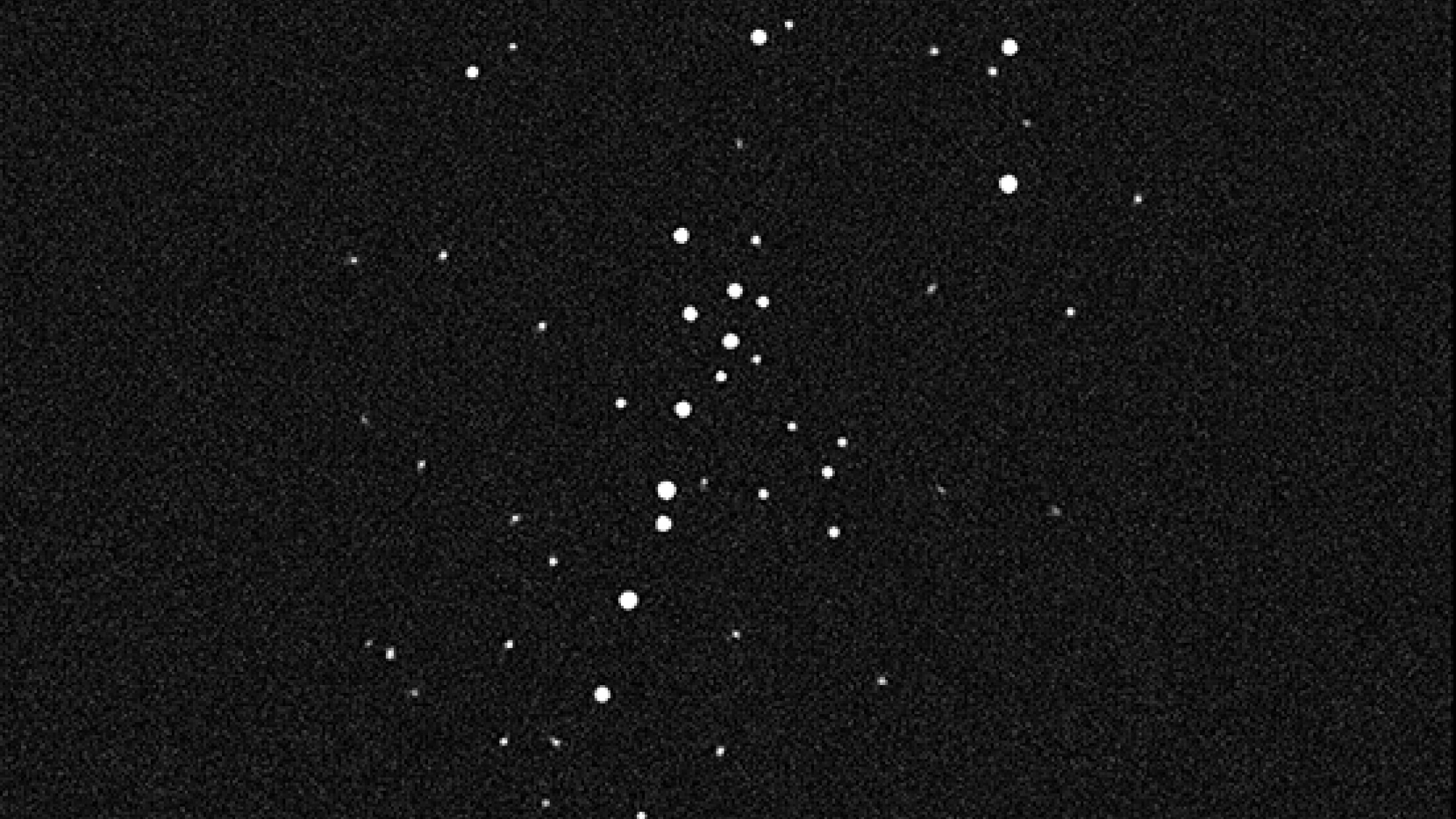
A faint object orbiting our galaxy, Ursa Major III, is challenging astronomers’ understanding of cosmic structures. Initially thought to be a dark-matter-dominated dwarf galaxy, new research suggests it might actually be held together by hidden black holes.

Where Is It Happening?

Ursa Major III is located over 30,000 light-years away, floating in the outer reaches of the Milky Way.

Advertisement

When Did It Take Place?

The discovery and subsequent analysis have been ongoing, with recent findings reshaping previous assumptions about this celestial object.

How Is It Unfolding?

– Researchers have identified an unusual configuration of stars within Ursa Major III.
– Instead of dark matter, a swarm of black holes might be binding the cluster together.
– Further observations are required to confirm the presence of black holes.
– The findings could redefine how astronomers understand the formation of such stellar objects.

Advertisement

Quick Breakdown

– Ursa Major III is a faint star cluster 30,000 light-years from Earth.
– Traditionally believed to be a dark-matter-rich dwarf galaxy.
– New data suggests black holes might be the key to its structure.
– Findings could influence future research on similar celestial objects.

Key Takeaways

The discovery of Ursa Major III’s potential black hole composition overturns conventional wisdom about how such distant celestial objects are structured. If confirmed, this satellite galaxy could serve as a model for understanding similar faint objects in the Milky Way. Astronomers are now eager to explore whether hidden black holes play a larger role in shaping these elusive structures than previously imagined.

Advertisement
Unraveling the mystery of Ursa Major III is like solving a cosmic whodunit, where the culprit may not be the usual suspect.

This discovery could revolutionize our understanding of the universe’s hidden forces.
– Dr. Sarah Chen, Astrophysicist

Final Thought

The revelation that Ursa Major III might be bound by black holes rather than dark matter could be the key to unlocking greater mysteries of our galaxy. As astronomers dig deeper, they may find more surprises hiding in the shadows of the cosmos. This discovery challenges long-held beliefs and emphasizes the importance of continuous exploration and questioning in the field of astronomy.

Source & Credit: https://www.space.com/astronomy/galaxies/the-milky-ways-faintest-satellite-may-not-be-what-astronomers-thought-these-results-solve-a-major-mystery-in-astrophysics

Advertisement

Advertisement
Continue Reading

Astrophysics

Chilean project aims to be at forefront of theoretical astrophysics

Published

on

Chile Unveils Groundbreaking Astro Project to Decode Cosmos

Advertisement

What’s Happening?

Chile is launching the CiELO project, a pioneering initiative that dives deep into the mysteries of galaxy formation and evolution. This ambitious venture showcases Chile’s expanding influence in computational astrophysics and stands as a beacon of scientific advancement in Latin America.

Where Is It Happening?

The project is based in Chile, leveraging the country’s ideal geographic conditions and established reputation as a hub for astronomy.

Advertisement

When Did It Take Place?

The project officially kicked off in early August, with ongoing developments expected to unfold over the coming years.

How Is It Unfolding?

– CiELO aims to enhance our understanding of how galaxies develop and interact.
– The initiative will interpret data from advanced telescopes like NASA’s James Webb Space Telescope.
– Chile’s unique geographical features make it a prime location for astrophysical research.
– The project will involve collaboration with top international research institutions to push boundaries of knowledge.

Advertisement

Quick Breakdown

– **Project Name:** CiELO
– **Focus:** Galaxy formation and evolution.
– **Location:** Chile.
– **Significance:** Positions Chile at the forefront of Latin American astrophysics.

Key Takeaways

The CiELO project is more than just another scientific initiative; it’s a bold step toward unraveling the mysteries of the universe. By combining Chile’s natural advantages with cutting-edge technology, the project aims to produce groundbreaking insights into the cosmos. This endeavor not only enhances Chile’s standing in the scientific community but also paves the way for future discoveries that could redefine our understanding of the universe. Exploring galaxies is like reading a cosmic odyssey, where each discovery is a new chapter revealing nature’s profound mysteries.

Advertisement

“CiELO has the potential to be a game-changer, providing us with a deeper understanding of the very fabric of our universe.”
– Dr. Maria Vasquez, Astrophysicist

Final Thought

The CiELO project is a shining example of how scientific curiosity and technological innovation can unite to unlock the secrets of the cosmos. As Chile steps into the limelight of astrophysical research, the world watches with anticipation, ready to witness the discoveries that could redefine our place in the universe.

Source & Credit: https://www.upi.com/Science_News/2025/08/12/chile-CIELO-project-astrophysics/3321755006755/

Advertisement

Advertisement
Continue Reading

Astrophysics

AVS wins study contract for ESA astrophysics mission

Published

on

Spanish Firm Secures ESA Astro Mission Contract

Advertisement

What’s Happening?

A Spanish satellite firm is reaching for the stars. Added Value Solutions (AVS) has been chosen for the preliminary phases of a groundbreaking European Space Agency (ESA) astrophysics mission. This marks the company’s bold move into the lucrative high-performance small satellite market. The victory positions AVS as a key player in Europe’s space industry.

Where Is It Happening?

The contract was secured by AVS in Orlando, Florida, while the mission will contribute to ESA’s broader scientific objectives in Europe.

Advertisement

When Did It Take Place?

The announcement was made on January 30, marking a significant milestone for AVS in its pursuit of space sector growth.

How Is It Unfolding?

– AVS will handle initial design and engineering for the ESA mission
– The contract represents AVS’s first major foray into high-performance small satellites
– The mission aims to advance astrophysics research using cutting-edge space technology
– This win positions AVS as a new competitor in Europe’s space industry

Advertisement

Quick Breakdown

– Company: Added Value Solutions (AVS)
– Contractor: European Space Agency (ESA)
– Mission: Astrophysics-focused space mission
– Significance: First major satellite contract for AVS

Key Takeaways

This contract win showcases AVS’s growing capabilities in the space technology sector. By securing this ESA mission, the company is demonstrating its potential to compete with established space industry players. The contract represents an important step in AVS’s evolution as a provider of advanced satellite solutions, with the potential to impact future astrophysics research.

Advertisement
Like a rising star breaking into the celestial firmament, AVS is positioning itself among the giants of space exploration.

This contract proves that innovation in the space sector isn’t just for the traditional heavyweights.

Rodolfo pjes, Director of Satellite Innovations

Final Thought

AVS’s ESA contract demonstrates the company’s growing expertise in space technology. This strategic win positions AVS as a serious contender in Europe’s space industry. As the company moves forward with this initial mission phase, it could pave the way for more significant contracts in the future. The space sector is becoming increasingly competitive, and AVS’s success story is just beginning.

Advertisement

Source & Credit: https://spacenews.com/avs-wins-study-contract-for-esa-astrophysics-mission/

Advertisement
Continue Reading

Trending

Copyright © 2025 Minty Vault.