Connect with us

NASA

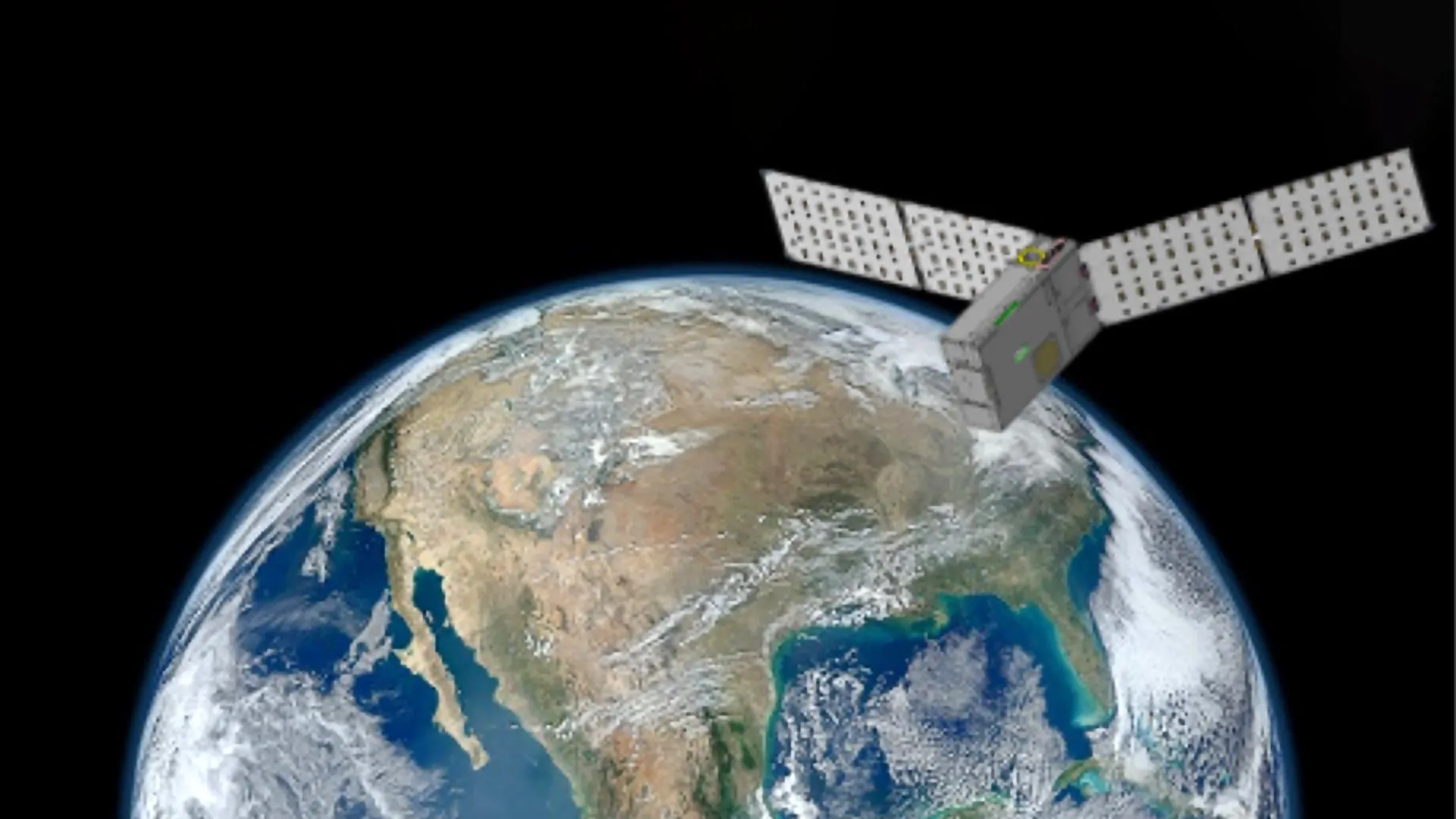
NASA’s PREFIRE satellites reveal a secret glow escaping from our planet

Published

on

**NASA CubeSats Unveil Earth’s Hidden Infrared Escape**

Advertisement

What’s Happening?

NASA’s groundbreaking PREFIRE mission is unveiling Earth’s secret infrared glow, thanks to a pair of tiny CubeSats. These satellites are capturing invisible heat as it escapes our planet, offering critical insights into how ice, clouds, and storms shape our climate. Scientists hope this data will revolutionize weather forecasting and climate models.

Where Is It Happening?

The satellites are focusing on Earth’s polar regions, eventually expanding their reach to the entire planet to gather comprehensive thermal data.

Advertisement

When Did It Take Place?

The mission is ongoing, with operations scheduled to continue through at least September 2026.

How Is It Unfolding?

– PREFIRE’s twin CubeSats are capturing far-infrared radiation, a previously overlooked component of Earth’s energy balance.
– The mission aims to improve climate models by analyzing how heat interacts with ice, clouds, and storms.
– Data collected will enhance weather predictions, helping scientists better understand climate change.
– The findings could refine how we assess the planet’s energy distribution and climate sensitivity.

Advertisement

Quick Breakdown

– NASA’s PREFIRE mission uses two CubeSats to measure Earth’s far-infrared heat escape.
– The mission is initially focused on polar regions but will expand globally.
– Insights could lead to improved weather forecasts and climate models.
– The mission is slated to continue until at least September 2026.

Key Takeaways

Earth’s ability to release heat into space is crucial for regulating its climate. NASA’s PREFIRE mission is shedding light on this process by measuring far-infrared radiation, which has been largely ignored until now. This invisible heat escape plays a pivotal role in how clouds, ice, and storms affect our weather and climate. Understanding these mechanisms could help scientists predict weather patterns more accurately and refine global climate models, ultimately aiding efforts to combat climate change.

Advertisement
Just as a thermometer reveals hidden body temperatures, NASA’s satellites are uncovering Earth’s unseen thermal secrets to decode its health.

This mission is rewriting what we know about Earth’s energy balance—it’s like unlocking a new chapter in climate science.
– Dr. Jane Hartley, Climate Scientist

Final Thought

NASA’s PREFIRE mission represents a leap forward in climate science, offering unprecedented insights into how Earth regulatess its energy. By studying this hidden infrared glow, scientists aim to uncover mysteries of ice, clouds, and storms, ultimately leading to better weather predictions and climate models. As these tiny satellites continue their mission, they hold the potential to transform our understanding of Earth’s ever-changing climate system, equipping us with the knowledge to face climate challenges head-on.

Source & Credit: https://www.sciencedaily.com/releases/2025/08/250817055324.htm

Advertisement

Advertisement
Continue Reading
Advertisement
Click to comment

Leave a Reply

Your email address will not be published. Required fields are marked *

NASA

Trump Moves to Strip More Federal Workers of Union Protections

Published

on

Trump Targets Federal Worker Unions with New Protections Rollback

Advertisement

What’s Happening?

President Trump has signed a significant executive order broadening the number of federal employees stripped of union protections, targeting agencies like NASA, and the National Weather Service. This pre-Labor Day move has ignited fears of intensified labor tensions, with the largest federal workers’ union vowing swift action.

Where Is It Happening?

The policy shifts affect various federal agencies across the United States, notably including the National Aeronautics and Space Administration (NASA), National Oceanic and Atmospheric Administration (NOAA), and the agency overseeing Voice of America.

Advertisement

When Did It Take Place?

President Trump issued the order just before Labor Day, setting a highly symbolic timeline that underscores the ongoing dispute between the administration and federal workers’ unions.

How Is It Unfolding?

– The executive order expands the categories of federal employees exempt from union bargaining rights.
– This move comes on the heels of previous legal battles between the administration and the American Federation of Government Employees (AFGE).
– The AFGE vows “immediate response,” though specific actions are still undisclosed.
– Critics warn this could escalate the long-standing conflict between the White House and federal employee unions.

Advertisement

Quick Breakdown

– New executive order targets federal employees at agencies like NASA and NOAA.
– The American Federation of Government Employees, the largest federal workers union, is preparing a counteraction.
– This enforcement aligns with the Trump administration’s ongoing efforts to limit federal union power.
– Legal challenges are anticipated, as this order escalates tensions before the presidential election.

Key Takeaways

This executive order marks another aggressive step by the Trump administration to curtail the influence of federal workers’ unions. By extending the reach of previous executive orders, the move aims to weaken collective bargaining rights for a broader set of employees, potentially impacting workplace conditions and morale. The AFGE’s response, while undefined, suggests a strong countermeasure is on the horizon, making this a critical moment in federal labor relations.

Advertisement
This clash is like a high-stakes game of regulatory chess, where every move by the president is met with a calculated response from organized labor—leaving federal workers caught in the middle.

Moves like this are a clear strategy to marginalize workers’ voices, and history shows such efforts often backfire by fueling stronger solidarity among labor groups.
– David Rosen, Labor Relations Analyst

Final Thought

President Trump’s newest executive order intensifies the battle between the administration and federal unions, signaling a long-term shift in labor policies. While the move is framed as administrative efficiency, it is widely seen as a blow to workers’ rights. As the AFGE gears up for a fight, this development could redefine federal workforce dynamics ahead of the upcoming election.

Source & Credit: https://www.nytimes.com/2025/08/29/us/politics/trump-federal-workers-union-protections.html

Advertisement

Advertisement
Continue Reading

NASA

The Last Super Guppy Still Airworthy

Published

on

The Last Airworthy Super Guppy: NASA’s Unique Cargo Giant Still Soaring

Advertisement

What’s Happening?

NASA’s Super Guppy, a massive and iconic cargo aircraft, continues to defy retirement, operating 28 years beyond its intended museum display. A relic from Airbus, this uncommon plane has become an enduring symbol of NASA’s logistical prowess.

Where Is It Happening?

The Super Guppy operates primarily out of NASA’s Ellington Field in Houston, Texas, serving missions that require transporting oversized cargo globally. Its unique design allows it to carry massive payloads that typical aircraft can’t handle.

Advertisement

When Did It Take Place?

Originally retired from Airbus service in 1997, the Super Guppy has been in continuous NASA operation ever since. As of 2025, it remains active decades after its expected decommissioning.

How Is It Unfolding?

– The Super Guppy’s unusual structure enables it to transport large components like spacecraft parts and satellite equipment.
– NASA’s decision to use it beyond its retirement has saved millions in procurement costs.
– Its longevity highlights advancements in aircraft maintenance and operational flexibility.
– The plane is a key asset for missions that require unique transportation solutions.

Advertisement

Quick Breakdown

– Only one Super Guppy remains in active service as of 2025.
– The aircraft was originally intended for Airbus before NASA acquired it in 1997.
– Its cargo hold can accommodate entire spacecraft components.
– NASA utilized it for missions that standard cargo planes couldn’t handle.

Key Takeaways

NASA’s Super Guppy is a testament to ingenuity and resourcefulness. Acquired decades ago for a fraction of the cost of developing a new aircraft, it has served as a cornerstone of NASA’s logistics, proving that well-maintained, decades-old technology can still be invaluable. Its continued operation underscores the importance of adaptability in space exploration and transportation.

Advertisement
Much like a vintage car that refuses to retire, the Super Guppy keeps on flying, proving that some machines never age out of usefulness.

The Super Guppy’s enduring service is a rarity in aviation—it’s like finding a time capsule that still works perfectly, year after year.
– Emily Carter, Aerospace Historian

Final Thought

**NASA’s Super Guppy remains a beacon of efficiency and adaptability. Its role in transporting critical cargo for space missions is irreplaceable, reflecting how remnants of the past can power the future. This aircraft is more than just a transport vehicle—it’s a legacy in action.**

Source & Credit: https://simpleflying.com/last-super-guppy-still-airworthy/

Advertisement

Advertisement
Continue Reading

NASA

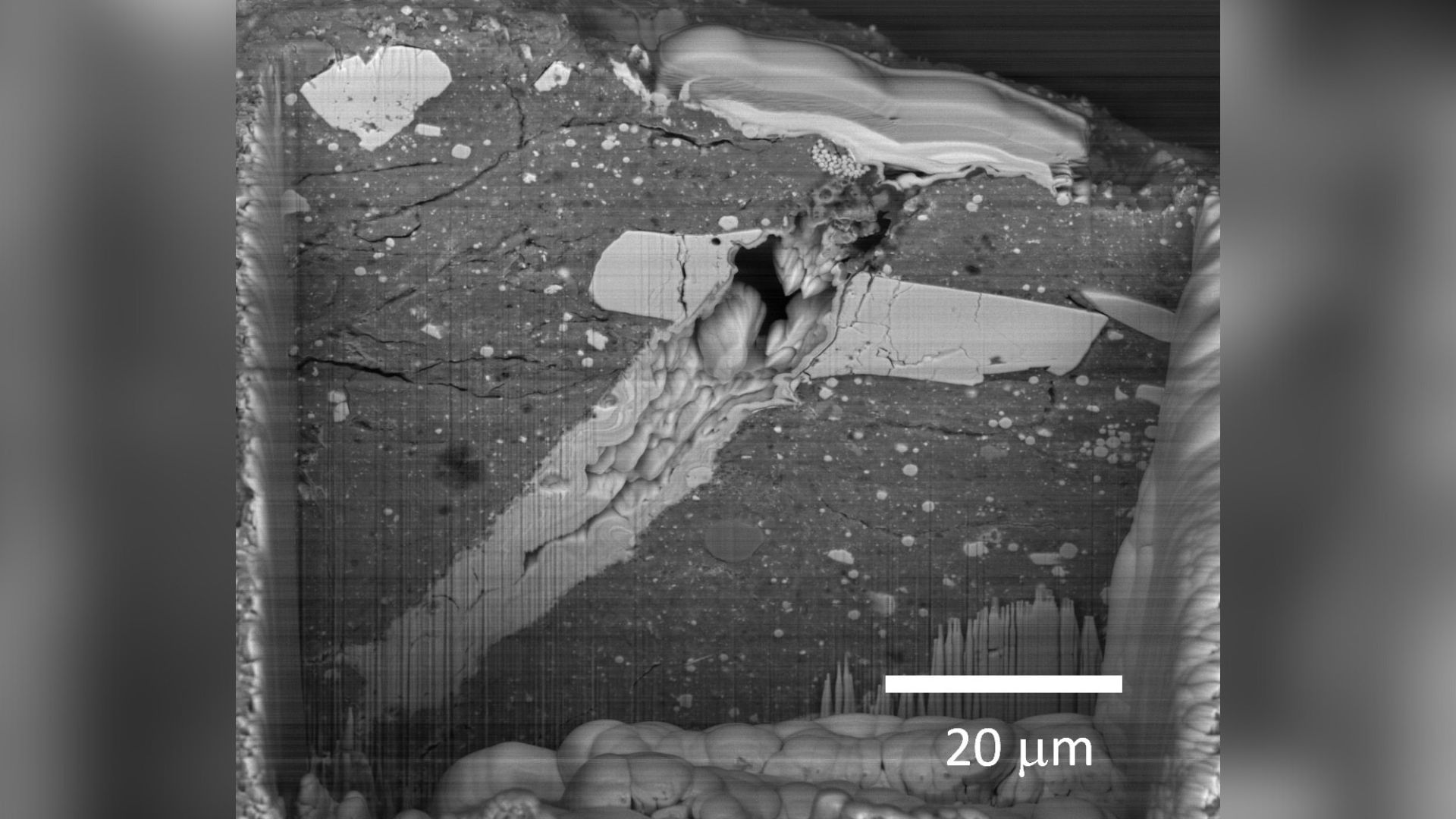
NASA puts asteroid Bennu under the microscope photo of the day for Aug. 29, 2025

Published

on

The Mysteries of Asteroid Bennu Unlocked by NASA

Advertisement

What’s Happening?

NASA’s OSIRIS-REx mission has made groundbreaking strides by delivering samples from asteroid Bennu to Earth in 2023. Scientists are now meticulously analyzing these fragments, which hold secrets from the early solar system. These findings could reshape our understanding of asteroid composition, planetary formation, and even the potential origins of life.

Where Is It Happening?

The research is being conducted in specialized NASA labs across the United States, after the OSIRIS-REx spacecraft successfully returned the collected samples from a 2020 mission to Bennu.

Advertisement

When Did It Take Place?

The asteroid samples were collected in late 2020 and returned to Earth in 2023. Detailed analysis began shortly after, with key findings published in 2025.

How Is It Unfolding?

– Scientists are examining the physical and chemical properties of the asteroid material.
– A focus is on carbon-rich molecules, which could provide clues about the building blocks of life.
– The composition of the samples is being compared to earlier remote observations of Bennu.
– The analysis aims to assess the asteroid’s potential hazard to Earth and its scientific value.
– Advanced lab techniques are being used to study the micro-structure of the particles.

Advertisement

Quick Breakdown

– Launched in 2016, the OSIRIS-REx mission delivered asteroid Bennu samples to Earth in 2023.
– Bennu is a near-Earth asteroid discovered in 1999 and considered a remnant from the early solar system.
– The samples may hold insights into organic compounds crucial for life as we know it.
– Ongoing studies aim to refine our understanding of asteroids and their role in planetary science.

Key Takeaways

The OSIRIS-REx mission has ushered in a new era of asteroid research, with the returned samples from Bennu acting as a window into the past. By studying these fragments, scientists are piecing together the puzzle of how our solar system formed and how water and organic material might have delivered life to Earth. Imagine peeling back the layers of time with each microscopic examination, revealing stories etched in space rocks for billions of years.

Advertisement
It’s like reading the diary of the universe, where each sample holds a page of history—waiting for the right scientist to decipher it.

The Bennu samples are a time capsule that could rewrite our understanding of the solar system’s evolution and the origins of life on Earth.

– Dr. Emma Green, Planetary Scientist

Final Thought

NASA’s work with asteroid Bennu is a testament to human curiosity and technological excellence. These ancient grains from space grant us a rare glimpse into the cosmos’s past, while stirring our collective imagination about life beyond our planet. As analysis continues, we stand on the brink of discoveries that could rewrite textbooks and fuel our quest to unravel the universe’s deep mysteries.

Advertisement

Source & Credit: https://www.space.com/astronomy/asteroids/nasa-puts-asteroid-bennu-under-the-microscope-space-photo-of-the-day-for-aug-29-2025

Advertisement
Continue Reading

Trending

Copyright © 2025 Minty Vault.